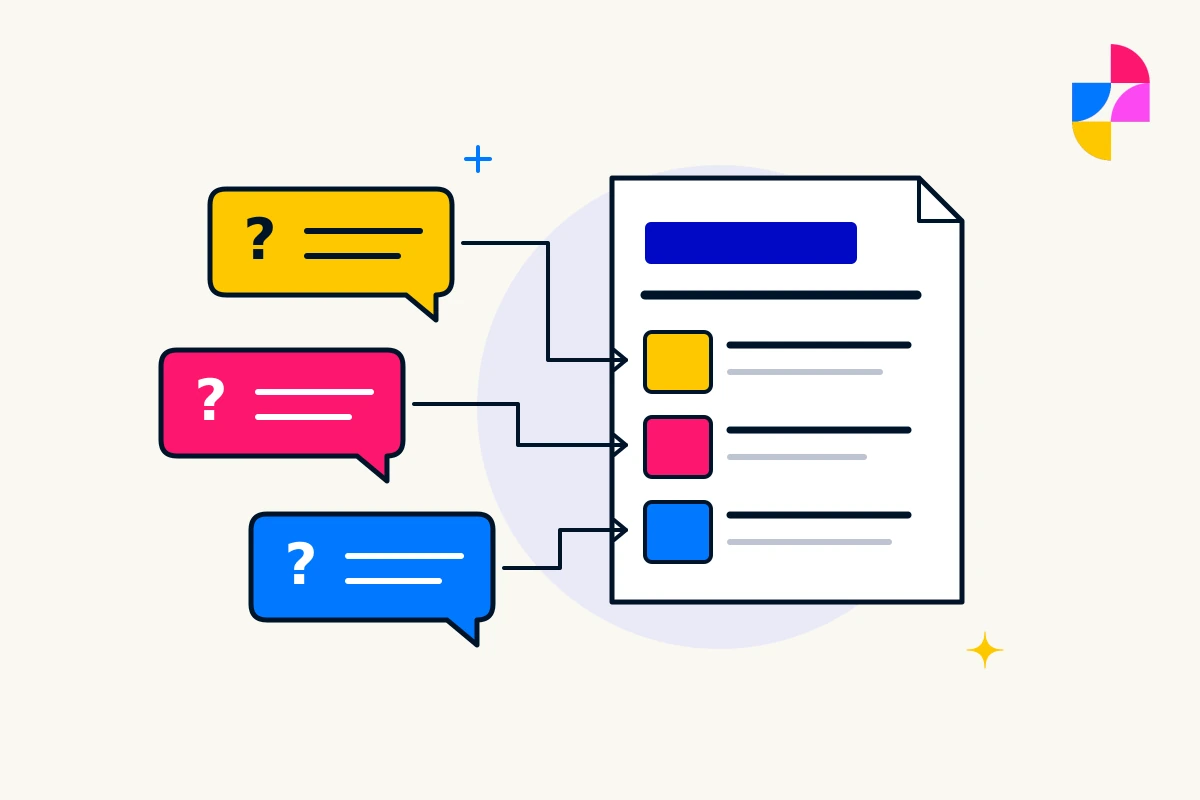
A customer asks whether you handle their kind of job. Another wants to know what happens after an inquiry. Those conversations contain useful design material, even if nobody uses the word “website.”
Human-centered website design starts by learning what people are trying to accomplish. For a small business, a practical first step is to gather real questions and turn them into a short customer-task brief.
Start with the questions you already hear
Look through recent inquiries and ask the people who answer calls what customers struggle to understand. Include questions from people who did not buy, where you have that information. Existing customers may already know things a first-time visitor does not.
Record the question in the customer’s language, the situation that prompted it, and the information needed to answer it. Remove names, contact details, and private job information before sharing examples with a website team. You need the pattern, not a copy of someone’s personal circumstances.
Keep questions separate at first. “Do you work in my area?” and “Can you start next week?” both concern availability, but the answers require different business information.
Ask about a real occasion
If you can speak with a few customers or likely customers, ask about the last time they looked for a service like yours. A recent experience gives them something concrete to describe.
- What was happening when you started looking?
- What did you need to find out before contacting a business?
- What information was hard to find or understand?
- What did you do when you could not find the answer?
Listen before suggesting solutions. Asking whether someone wants a particular feature can steer the conversation toward your idea. Asking what they needed to know leaves room for an answer you had not considered.
Separate evidence from your interpretation
The GOV.UK guidance on learning user needs recommends researching actual or likely users and treating opinions that do not come from users as assumptions to investigate.
Apply that distinction to your notes. “A caller asked whether maintenance includes seasonal cleanup” is an observation. “Our service names may be unclear” is an interpretation. “Everyone wants a package comparison” goes beyond what that conversation establishes.
A handful of conversations can reveal useful questions. It cannot tell you how every customer thinks. Note whose perspective is missing and where the evidence is still thin.
Write a brief the designer can use
Here is a fictional example for a landscaping business:
- Person and situation: a property manager comparing ongoing grounds-care providers.
- Task: establish whether the service covers their property’s needs before requesting a discussion.
- Questions to answer: which work is included, what is excluded, and which property types the business serves.
- Evidence: an anonymized summary of actual inquiry questions would go here.
- Still unknown: whether first-time prospects understand the current service names.
Keep the brief about the customer’s task. Deciding which layout or tool supports it comes afterward. If your team disagrees about a need, record the disagreement and the question you still need answered.
Bring this brief to a conversation about Imbark’s custom web design. It gives business goals, audience, and page structure a concrete starting point: what the customer needs to understand before taking the next step.